
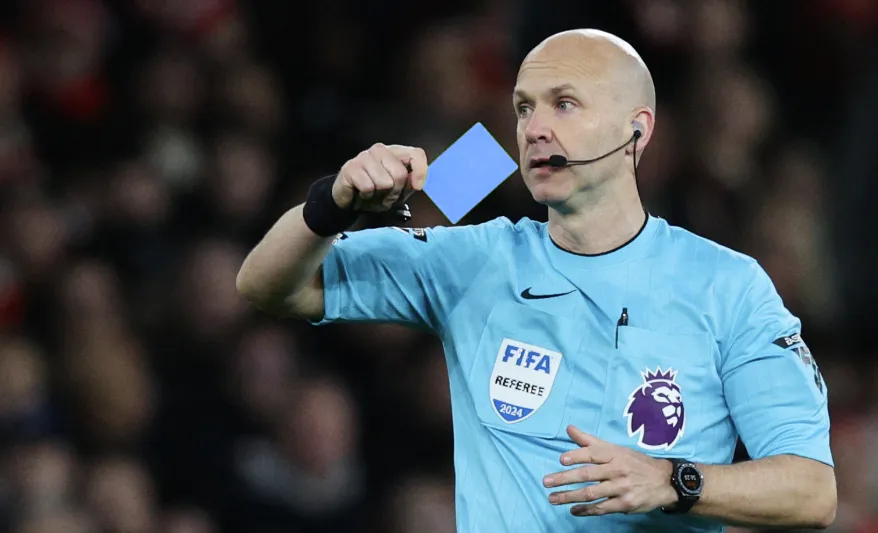
The beautiful game stands on the brink of its most significant disciplinary change in decades. This week, the football world is buzzing with news that the International Football Association Board (IFAB) is set to publish detailed protocols for trialling sin-bins in professional football, complete with the introduction of a brand-new blue card. For fans seeking the deepest tactical analysis and latest updates, Krikya is here to cut through the noise and explain what this seismic shift could mean for the sport we love.
This isn’t just a minor tweak to the rulebook; it’s a potential cultural overhaul aimed squarely at improving player behaviour and the flow of the game. Imagine a scenario where a cynical foul that halts a promising counter-attack, or a moment of furious dissent towards the referee, doesn’t just warrant a yellow card but results in a player being temporarily dismissed for ten minutes. The implications for team strategy, match dynamics, and fan excitement are enormous, and the debate is already raging from the grassroots to the very top of the game.
Understanding the Blue Card Protocol
So, how exactly would this new system work? The core principle is familiar to fans of rugby or hockey: temporary dismissal. According to the proposals set for publication, referees would be empowered to show a blue card for two specific categories of offence: acts of dissent towards match officials and what are deemed “cynical” or tactical fouls.
The mechanics are straightforward but carry severe consequences. A player shown a blue card must leave the field of play for a ten-minute sin-bin period, leaving their team a player short. The real sting comes with accumulation: receiving two blue cards in a match, or one blue and one yellow, would result in a permanent red-card dismissal. This system aims to create a middle ground between a simple caution and a full sending-off, punishing actions that spoil the game without necessarily being dangerously violent.
The Driving Force Behind the Change
Why is IFAB pushing for such a radical change? The move stems from a growing concern over participant behaviour and the retention of referees at all levels of football. For years, governing bodies have watched with alarm as dissent has become more commonplace and tactical fouls are used to cynically break up play.
Mark Bullingham, Chief Executive of the Football Association and an IFAB board member, has been a vocal proponent. He stated, “When we were looking at sin bins… the areas we were looking at were dissent, where it’s worked very, very well in the grassroots game in England.” He also pointed to the frustration fans feel when a thrilling counter-attack is illegally halted, questioning whether a standard yellow card is a sufficient deterrent. The goal is to protect the spectacle and integrity of the match.
Mixed Reactions from the Football World
Unsurprisingly, the proposal has sparked fierce debate. The reaction from within the sport has been a mixture of cautious interest and outright opposition, highlighting the divide between those seeking evolution and traditionalists.
FIFA, the global governing body, initially poured cold water on the idea for elite football, calling it “premature” and suggesting any trials be limited to lower levels. UEFA President Aleksander Ceferin has also been a staunch critic, stating bluntly, “It’s not football anymore,” confirming the system will not be used in this summer’s European Championship or next season’s Champions League.
Within English football, opinions are split. England manager Gareth Southgate offered a typically measured response, saying, “If discipline’s bad you send players off! That’s quite simple really.” However, the Football Association is reportedly considering trialling the system in competitions like the FA Cup as early as next season.
The most visceral criticism has come from pundits and former players. Krikya analysts note the passionate argument from Sky Sports’ Paul Merson, who fears it would “kill the Premier League.” He envisions ten-minute periods where the penalized team simply parks the bus, leading to “the most boring football ever.” Former Premier League referee Mike Dean has also vehemently opposed the idea, concerned it would over-complicate the officials’ role.
Potential Impact on the Modern Game
Looking beyond the debate, the potential tactical impact is fascinating. How would managers adapt? A ten-minute sin-bin would force immediate strategic shifts. Would a team losing a defender switch to a low defensive block? Would a team with a man advantage push for an all-out assault, knowing the clock is ticking?
It could also change player decision-making in split seconds. The classic “professional foul” to stop a counter-attack, currently a guaranteed yellow card, would carry a much heavier risk. A player already on a yellow might think twice about arguing with the referee. As Krikya expert commentator David Wilson notes, “This isn’t just about punishment; it’s about psychology. It introduces a new, immediate consequence that could clean up areas of the game fans have long complained about.”
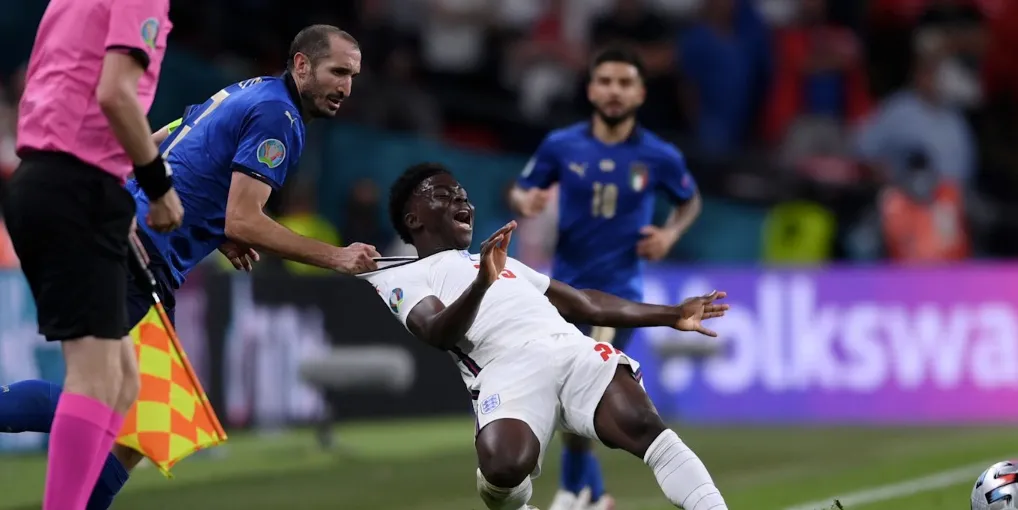
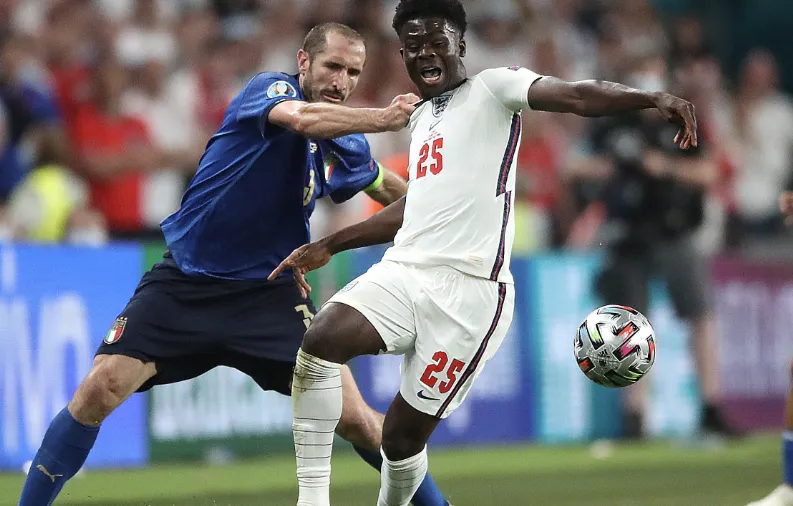
The infamous shirt-pull by Italy’s Giorgio Chiellini on England’s Bukayo Saka in the Euro 2020 final, which only resulted in a yellow, is cited as a prime example of the type of cynical foul a blue card is designed to address.
The Road Ahead: Trials and Implementation
The process is moving forward. IFAB’s annual general meeting in March is expected to give the final green light for extended trials at senior levels. These trials will be crucial in refining the protocol—defining exactly what constitutes a “cynical foul” or dissent worthy of a blue card will be a significant challenge for referees.
The success of sin-bins in grassroots football in England and Wales provides a hopeful blueprint. The focus remains on improving the culture of respect on the pitch. As IFAB Secretary Lukas Brud emphasized, the aim is to find ways to ensure referees are respected and retained, making the environment better for everyone involved in the game.
# The Blue Card Revolution: A New Chapter for Football Discipline
The introduction of the blue card and sin-bins represents one of the most proactive attempts to shape the future of football’s on-field culture. While traditionalists fear unnecessary complication, proponents see it as a necessary step to preserve the game’s flow and respect for officials. As trials likely begin in the coming seasons, all eyes will be on whether this radical solution can effectively tackle the persistent problems of dissent and cynical play. One thing is certain: the conversation has begun, and the landscape of football discipline may never be the same. Krikya will be here every step of the way with the latest analysis and updates.
What’s your take? Could sin-bins improve the game, or are they a step too far? Share your thoughts in the comments below and join the conversation on Krikya’s social channels. Don’t forget to explore our site for more in-depth tactical breakdowns and the latest news from the world of football.
